Customer Care in 2026: Mastering Empathy with AI

In 2026, customer care is getting a serious upgrade. We're talking about a world where artificial intelligence isn't just about speed and efficiency, but about truly understanding how customers feel. This isn't science fiction anymore; it's about using smart tech to make every interaction more human. The focus is shifting towards 'Customer Care in 2026: Emotional Intelligence Meets AI,' where technology helps us connect on a deeper level, making sure no customer feels like just another ticket number. It's a big change, and it's happening now.
Key Takeaways
- AI is becoming a tool to boost empathy, not replace it, by helping agents understand customer emotions in real-time.
- The best customer service in 2026 will involve a partnership between humans and AI, where each plays to their strengths.
- New AI systems can predict what customers need and adapt messages to match their mood, making interactions feel more personal.
- Ethical use of AI in customer care is vital, focusing on transparency and respecting customer privacy to build trust.
- While AI handles routine tasks, human interaction remains critical for complex issues and building strong customer relationships.
The Evolving Landscape of Customer Care in 2026

Customer care in 2026 looks very different from only a few years ago. Support isn’t just about fixing problems—it's the frontline of your brand, shaping loyalty and even driving profits. AI solutions now work side-by-side with people to create a smarter, more empathetic customer experience. But this new landscape also has some awkward edges—tech and people must learn to team up, not compete. Let’s break down how empathy and AI have started to shape the customer care world.
AI as an Empathy Amplifier
AI isn't just automating basic stuff anymore. The new generation of customer support tools tries to understand how customers feel, not just what they say. For example:
- AI chatbots pick up on emotional cues like frustration or joy in customer messages.
- These systems can switch their tone—calm, apologetic, upbeat—to match the customer’s mood.
- They notify human agents when someone’s having a really rough time, so a real person can step in.
Suddenly, AI isn’t cold—it actually helps support teams come across as more understanding than ever before.
The Human-AI Collaboration Imperative
It’s easy to think that smarter AI will just replace support jobs, but that’s not the reality in 2026. Actually, the best customer experiences happen when humans and AI play to their strengths:
- AI handles simple questions quickly, leaving people the space to talk through more complicated issues.
- Support agents rely on AI to pull case histories, spot trends, and suggest solutions, but they still make the tough judgment calls.
- Collaboration tools let people step in when emotion or context is missing from the AI’s response.
The future isn’t about choosing between people and technology. The winning formula is using both together, especially when it comes to showing empathy.
The Empathy Loop Framework
This year, brands aren’t just guessing how to connect with customers. They use something called the Empathy Loop:
- Listen: AI tools collect feedback and emotional signals in every interaction.
- Understand: Systems compare these emotions to customer histories and patterns to figure out what’s really going on.
- Respond: Messaging is adapted in real-time, sometimes by AI, sometimes by a person, depending on the customer’s needs.
- Refine: Insights from interactions are shared internally, so the process always gets better.
Here’s a quick look at what matters most to companies today:
| Focus Area | Why It Matters |
|---|---|
| Customer Retention | Costs less and builds more loyalty |
| Human-AI Teamwork | Resolves issues faster |
| Emotional Awareness | Makes support feel more authentic |
Customer care in 2026 is about more than tech upgrades—it's a world where empathy and AI mix, sometimes awkwardly, sometimes beautifully. If you get the balance right, your support team becomes your biggest strength.
Mastering Emotional Intelligence with AI
In 2026, customer support isn’t just about being quick or efficient—it’s about reading between the lines to understand how people feel in every moment. Let’s look at how AI is picking up emotional smarts and what that means for brands and customers alike.
Real-Time Empathy Modeling for Mood Detection
AI can now figure out your mood by picking up tiny cues in your words, voice, and reactions—everything from a long pause to a slightly sharper tone. Instead of just seeing a purchase or a chat message, AI senses if you’re uncertain, annoyed, or even a bit excited.
- If someone is hesitating before a purchase, the AI shifts its language to something more reassuring and less pushy—think “Explore Options” rather than “Buy Now.”
- Frustration in support chats? The system softens its tone, offers gentle help, and skips the upsell.
- AI’s mood reading means customers feel understood (or at least less ignored), not just sold to.
When support knows how you feel in the moment, help starts to feel personal—even if it’s from a bot.
Predictive Personalization: Anticipating Customer Needs
The wild part? AI doesn’t just react; it guesses what you might need before you ask. By tracking patterns like dropped chats or slower clicks, it predicts your next emotion or hurdle.
Here’s a rundown:
- AI tracks recent interactions—both happy and not-so-happy moments.
- It spots early signs of frustration or hesitation.
- Before you even ask for help, AI suggests a guide, surfaces FAQs, or prompts a friendly check-in from a human rep.
| Scenario | AI Action | Intended Result |
|---|---|---|
| Drop in engagement | Sends caring follow-up | Prevents customer churn |
| Repeated page visits | Offers tailored recommendations | Builds trust and connection |
| Prolonged checkout | Changes prompts, adds reviews | Soothes doubt, boosts sales |
Anticipation is now table stakes for any brand wanting lasting relationships.
Adaptive Messaging for Dynamic Content Creation
Generic campaigns are out; fluid, context-aware content is in. AI now rewrites messages—all on its own—based on what you’re probably feeling.
- Had a rough day? The system tones down urgency, avoids caps, and uses calming colors.
- Just made a big purchase? You’ll get a heartfelt thank you, maybe even a video message, not a hard-sell follow-up.
- New features or updates? AI tailors the rollout intro to your usage style and past feedback.
Good AI doesn’t just spit out personal info or deals; it mirrors your emotional state, so messages always land right.
Bottom line: Emotional intelligence isn’t just a buzzword in 2026. It’s how brands show up for people—as real as any human on the other end of a screen. And in a world of endless choice, that’s what makes someone stick around.
Ethical Considerations in AI-Driven Empathy
As we get deeper into 2026, using AI to understand and respond to customer emotions is becoming pretty standard. But, let's be real, there's a fine line between being helpful and being creepy. We've got to be super careful about how we use this tech. It's not just about making things efficient; it's about doing it the right way, respecting people's feelings and privacy.
The Ethics of Adaptive Empathy
When AI starts guessing how someone feels and changing how it talks to them based on that, we're entering tricky territory. The goal is to make customers feel understood, not manipulated. This means being upfront about what the AI is doing. If a system is adjusting its tone because it thinks you're stressed, it should probably tell you. It’s about building trust, and trust doesn't come from surprising people with how much you
The Future of Customer Journeys
Customer journeys in 2026 are set to become far more intelligent and responsive, thanks to AI. We're moving beyond simple, linear paths to experiences that feel more like a continuous, evolving conversation. AI is getting really good at tracking what a customer is doing, not just on one site, but across different touchpoints. This means the system can actually adjust the 'story' of their experience as they go, making it feel more personal and relevant.
Self-Aware Customer Journeys Powered by AI
Imagine a system that remembers not just what you bought, but how you felt during past interactions. By 2026, AI will be capable of building a detailed emotional history for each customer. This allows for journeys that dynamically adjust their tone and content. If a customer has a history of feeling anxious about a certain type of purchase, the AI can proactively offer reassurance or simpler options. This isn't just about showing you products; it's about building a relationship that feels understood. It’s like the journey itself is aware of your past feelings and current mood, tailoring its approach accordingly.
Multimodal AI for Seamless Support Experiences
Customers don't stick to one way of communicating anymore, and neither should support. By 2026, expect AI to handle interactions across various channels – text, voice, even video – with a consistent understanding of the customer's situation. If you start a chat about a product issue and then decide to call, the AI should already know what you discussed. This means no more repeating yourself. The goal is to make switching between channels feel completely natural, like you're just continuing the same conversation.
The Rise of Specialized Multi-Agent Systems
Instead of one big AI trying to do everything, the future will see specialized AI agents working together. Think of it like a team of experts. One AI might be brilliant at understanding technical issues, while another excels at handling billing questions. If a complex problem arises, these specialized agents can collaborate, or intelligently decide when a human agent is needed. This multi-agent approach allows for quicker, more accurate problem-solving, especially for intricate customer needs.
Here's a look at how these systems might work:
- Initial Triage: An AI agent handles the first contact, gathering basic information.
- Specialized Routing: Based on the issue, the AI directs the customer to the most appropriate AI specialist or human agent.
- Collaborative Problem-Solving: If needed, multiple AI agents can share information to find a solution.
- Intelligent Handoff: The system identifies when human empathy or complex decision-making is required and smoothly transfers the customer.
The focus is on creating a customer experience that feels less like a series of disconnected steps and more like a continuous, supportive relationship. AI's role is to make this complex orchestration feel simple and intuitive for the customer.
Human Interaction Remains Essential
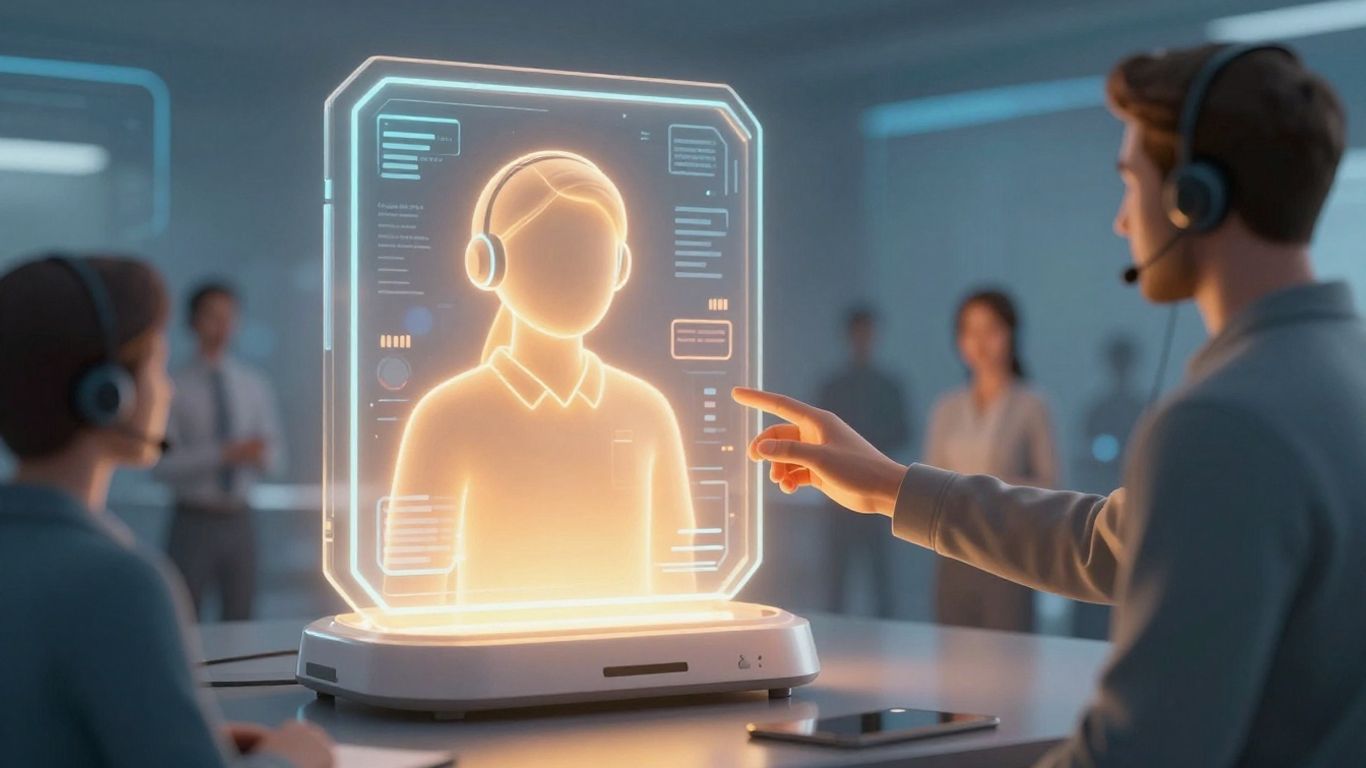
Even with all the fancy AI tools we're seeing pop up, there's still a big part of customer service that just can't be replaced by a machine. It’s that human touch, you know? Like, when you're really stuck on something, and you just need to talk to a real person who gets it.
The Irreplaceable Value of Human Touch
Look, AI is getting pretty good at handling the basics. It can answer common questions, guide you through simple steps, and even figure out if you're upset. But when things get complicated, or when you're just feeling really stressed out, that's when you want a human. People need to feel heard, understood, and cared for, and that's something AI still struggles to do genuinely. It's not just about solving the problem; it's about how you feel during the process. A lot of customers say their biggest frustration is not being able to reach a real person when they need to. It’s a pretty common complaint, actually.
Designing the Ideal AI to Human Handoff
So, how do we make sure the switch from AI to a person is smooth? It's all about setting it up right. The AI should be smart enough to know when it's out of its depth or when a customer is really upset. It needs to gather all the important info first – what's the problem, what's the customer's mood – and then pass that along to the human agent.
Here’s a simple way it could work:
- AI Gathers Info: A customer types, "My order is late, and I needed it for a party tonight! This is really frustrating."
- AI Spots Trouble: The AI notices words like "late," "party tonight," and "frustrating." It knows this is a time-sensitive issue and the customer is upset.
- AI Passes the Baton: The AI immediately connects the customer to a human agent, giving them a quick summary: "Customer is upset about a late order needed for a party tonight."
- Human Steps In: The agent starts the chat with, "Hi there, I see your order is delayed and you needed it for a party. That sounds really stressful, but I'm here to help sort this out for you right now."
This way, the customer doesn't have to repeat themselves, and the agent already knows what's going on and that the customer is upset. It makes a huge difference.
The goal isn't just to fix the customer's issue. It's about addressing the feelings they're having – the stress, the confusion, the annoyance. When you get that right, customers remember it.
Video Calls for Humanizing Customer Service
Another way companies are bringing back that human element is through video calls. It’s not just about efficiency anymore; it’s about making that connection. When you can see and hear someone, even if they're miles away, it feels more personal. It helps build trust and makes it easier to sort out tricky problems because you can show each other what's going on. Think about trying to explain a technical issue – a quick video chat can clear things up way faster than typing back and forth. It adds that layer of warmth and personal attention that AI, for all its power, just can't quite replicate yet.
Measuring the Impact of Empathetic AI
So, how do we know if all this AI-powered empathy is actually working? It’s not enough to just feel like we’re being more understanding; we need to see the results. This is where we get down to the nitty-gritty of tracking what matters.
Key Metrics for Adaptive Personalization Success
We need solid numbers to back up our efforts. Think of these as the scorecards for our AI’s empathy game. They help us see if our personalized messages are hitting the mark emotionally, not just factually.
- Emotional Accuracy Rate (EAR): This measures how well the AI picks up on a customer's true feelings across different chats, emails, or even social media mentions. It’s about calibration – is the AI getting the mood right?
- Predictive Engagement Score (PES): This looks at how likely a customer is to respond positively to a message because it felt right. Did our AI guess what they needed or felt before they even said it?
- Trust Velocity (TV): How quickly do customers start to trust us when our AI communicates with them adaptively? This tracks how fast emotional loyalty builds.
- Personalization Depth Index (PDI): This shows how much we’re actually changing our approach for each individual. Are we just tweaking a few words, or are we truly adapting the whole experience?
Quantifying Emotional Accuracy and Trust Velocity
Let's dig a bit deeper into two of these. EAR is all about the AI's listening skills. If the AI thinks a customer is frustrated when they're actually just confused, that's a miss. We need to train it to pick up on the subtle cues – the hesitations, the word choices, even the punctuation.
Trust Velocity is fascinating because it’s about speed. In today's world, patience is thin. If an AI can quickly build rapport and show it understands, that trust forms much faster. We can measure this by looking at how quickly customer sentiment improves after an AI interaction, or how fast they move through a sales funnel without hesitation.
Building trust isn't a one-time event; it's a continuous process. When AI can consistently demonstrate understanding and adapt its approach, it speeds up this trust-building cycle significantly, making customers feel more secure and valued.
Linking Empathy to Return on Investment
Ultimately, this all has to tie back to the business. Happy, understood customers tend to stick around and spend more. We can track this through metrics like:
- Customer Retention Rate: Are customers staying with us longer because they feel understood?
- Cross-sell/Upsell Conversion Rates: When we offer something new, are customers more receptive because the AI has built a foundation of trust and relevance?
- Customer Lifetime Value (CLV): Over time, do customers who interact with our empathetic AI spend more with us?
- Reduced Support Costs: If AI can resolve issues more empathetically upfront, do we see fewer repeat contacts or escalations?
We can even look at something like the Empathy-to-Conversion Ratio (ECR). This directly asks: how much did that empathetic interaction contribute to a sale or desired action? It’s about proving that understanding customers isn't just a nice-to-have; it’s a direct driver of business success. The data shows that companies focusing on genuine care see a significant boost in loyalty and revenue, proving that empathy is a smart financial strategy.
Empathetic AI is changing how businesses connect with customers. It helps us listen better and solve problems in a way that feels more human. Want to see how your business can use empathetic AI to make customers happier? Check out our website and discover new ways to improve every conversation.
The Road Ahead: Empathy as the Constant
So, as we look towards 2026, it’s clear that AI isn't going to replace the human element in customer service. Instead, it's becoming a powerful partner. Think of it like this: AI can handle the heavy lifting, sorting through data and spotting patterns, but it's the human touch, the genuine understanding, that truly makes a difference. Customers still want to feel heard and valued, especially when things get tricky. The real win will be in how we blend these two – using smart tech to make our human agents even better at showing that empathy. It’s about making sure every customer interaction, whether it starts with a bot or a person, feels personal and supportive. That’s how we build real loyalty, not just get through the day.
Frequently Asked Questions
How does AI help customer service teams show empathy in 2026?
AI in 2026 acts like a helper that can quickly understand how a customer feels by looking at their words and tone. It can spot when someone is upset or stressed and alert a human agent to step in. This way, the customer gets help from someone who already knows what’s wrong and how they’re feeling, making the experience feel more personal and caring.
Can AI really understand human emotions?
AI can’t feel emotions like a person, but it can learn to spot clues in how people talk or write. It looks for words, voice changes, and even how fast someone responds to guess their mood. While it’s not perfect, it helps companies react faster and make customers feel heard.
Will I always be able to talk to a real person if I want to?
Yes, most companies know that customers want the option to talk to a real person, especially when they’re upset or have a tricky problem. Some new laws are even being discussed to make sure you can always reach a human if you need to.
How does AI keep my information safe and private?
Companies in 2026 must be very clear about how they use your data. They ask for your permission before using emotion data, let you see what’s collected, and make it easy to delete your info. There are also new rules and checks to make sure AI uses your data fairly and safely.
What happens when AI hands me off to a human agent?
When AI sees that you need more help, it gives the human agent a quick summary of your problem and your mood. This means the agent can start by showing they understand what you’re going through, so you don’t have to repeat yourself. This makes the help you get faster and more caring.
How do businesses know if their AI is being empathetic enough?
Companies watch things like how quickly trust is built, if customers feel understood, and if more people recommend their service. They use simple scores to measure if AI is picking up on feelings correctly and if customers are happier because of it.


Comments
Post a Comment