2026's Back Office Support: Powering Business Expansion from Behind the Scenes

In 2026, the gears turning behind the scenes of your business are going to be more important than ever. We're talking about Back Office Support in 2026: The Silent Driver of Business Growth. Think of it as the engine room of a ship; you don't always see it, but without it, nothing moves forward. This year, technology and new ways of working are really stepping up to help businesses expand, often without a lot of fanfare. It's all about making things run smoother and smarter so the rest of the company can focus on growing.
Key Takeaways
- Agentic AI is moving from just trying things out to becoming specialized, with AI agents handling more complex tasks and acting on their own within set rules. This means businesses need to think about how to manage these agents safely and responsibly.
- Customer Success Managers (CSMs) are shifting from just managing relationships and tasks to becoming strategic advisors. They'll need strong business sense and people skills to help customers make smart choices, especially as AI handles more of the routine work.
- AI Operations (AI Ops) will become a bigger deal as AI gets built into everyday business systems like ERP and CRM. This requires a focus on security, good data, and making sure AI works well with existing systems.
- Program Managers will be key in setting up and managing the new AI systems and workflows. They'll help decide which tasks AI can do, where humans are still needed, and how to create new hybrid roles.
- Consumption Leads and Forward-Deployed CSMs will focus on helping customers get the most value from products, especially with new pricing models like paying for what you use. This makes expansion a continuous thing, not just a yearly event.
1. Agentic AI
Forget just automating tasks; agentic AI is stepping up to actually do them. Think of it as giving your back office a team of super-smart assistants that don't need coffee breaks. These aren't your grandma's chatbots. By 2026, agentic AI is moving beyond simple Q&A to handle complex workflows, interpret goals, and even learn from their own actions to get better over time. This means tasks like managing project updates, summarizing meetings, or even flagging potential issues before they become big problems can be handled with minimal human input.
We're seeing a shift from humans guiding AI to AI taking the lead, with humans providing oversight and expertise. It's about augmenting our own skills, not replacing them entirely. This is especially true in areas like customer service, where an AI agent might decide the best way to handle a query – whether that's a quick automated response, a more sophisticated AI model, or handing it off to a human if the situation gets tricky. The goal is to find that sweet spot where AI handles the routine, freeing up people for the really important stuff.
Here's a look at how agentic AI is changing the game:
- Autonomous Action: AI agents can now interpret goals and take action across multiple steps without constant human direction.
- Continuous Improvement: They learn from outcomes, getting smarter and more efficient with each task.
- Workflow Integration: Agentic AI is being embedded directly into business processes, making operations smoother.
- Multi-Agent Systems: Instead of one AI trying to do everything, we're seeing teams of specialized AI agents working together to solve bigger problems.
The real trick with agentic AI isn't just about making it smart; it's about making it work well with people. Companies that focus on how humans and AI interact, and test those interactions thoroughly, are the ones that will really see the benefits. It's about building trust and making sure the AI feels helpful, not just technically impressive.
Of course, it's not all smooth sailing. A big hurdle is making sure the AI actually gets things right. We're seeing a move towards using multiple AI models together, like a "federated AI" approach, to boost accuracy and flexibility. This helps ensure that as businesses scale up their use of agentic AI, the systems remain reliable and adaptable. Ultimately, agentic AI in 2026 is about building a more capable, responsive, and efficient back office that can truly support business growth.
2. Customer Success Managers
Customer Success Managers (CSMs) are really the ones making sure customers get what they paid for, and then some. It’s not just about keeping them happy anymore; it’s about showing them how their investment is actually making their business better. Think of them as the bridge between what a company offers and what a customer actually achieves.
The role is shifting from just managing relationships to becoming strategic advisors. Instead of just checking in or quarterbacking tasks, CSMs in 2026 are expected to guide customers on how to best use products and services to hit their specific business goals. This means they need to understand the customer's business inside and out, not just the product they're using.
Here’s a look at how the CSM role is changing:
- Outcome Architects: CSMs are now focused on designing customer journeys that lead to measurable business results, not just feature adoption.
- Consultative Partners: They're moving away from operational tasks and towards advising customers on strategy, helping them make tough decisions.
- Data Interpreters: With AI surfacing more information, CSMs need to interpret signals, prioritize actions, and connect product use to real business outcomes.
- Revenue Drivers: Their work directly impacts retention and expansion, making them key players in the company's revenue growth.
The days of CSMs being glorified project managers are fading fast. As AI handles the routine stuff, the human element becomes about judgment, strategic advice, and understanding the 'why' behind customer actions. It’s about shaping decisions, not just managing processes.
This evolution means CSMs need a different skill set. They're becoming more like consultants, needing strong business sense and the ability to make decisions even when things aren't perfectly clear. It’s a more challenging, but also more rewarding, position that directly contributes to business expansion by ensuring customers are truly successful.
3. AI Ops
Alright, let's talk about AI Ops. It's not just about having AI tools; it's about how we actually run them day-to-day. Think of it like this: you wouldn't just buy a fancy car and never get it serviced, right? AI Ops is the maintenance, the tuning, and the overall management of your AI systems.
In 2026, we're seeing AI move beyond just simple tasks. We're talking about AI agents that can handle complex jobs, sometimes without a human looking over their shoulder every second. This means we need solid processes in place. AI governance is becoming the new standard for how businesses manage their AI. It's not just about building cool AI models anymore; it's about making sure they work reliably, securely, and follow the rules.
Here’s what that looks like in practice:
- Standardizing AI Use: Companies are figuring out how to approve, secure, and keep an eye on all the different AI tools and agents popping up across the business. It’s about having one consistent way of doing things.
- Data Security: Making sure the AI only gets the information it needs, and nothing sensitive, is a big deal. We're using special setups, like an 'Agent Mesh', to keep data clean and prevent issues like prompt injection.
- Context Engineering: Forget just typing in basic commands. We're building systems that give AI the right background information so it can make smarter decisions, almost like it has a memory of what's going on.
- Monitoring and Maintenance: Just like any other tech, AI systems need to be watched. This includes checking performance, spotting problems early, and making sure they're running efficiently.
The real win with AI in 2026 isn't just about having the smartest algorithms. It's about having the right infrastructure and processes to make AI a dependable part of how the business runs, day in and day out. It's about treating AI like a well-managed supply chain, not just a bunch of separate experiments.
We're also seeing the rise of 'multi-agent systems' – basically, AI teams that can talk to each other to solve bigger problems. This requires careful orchestration to make sure they work together smoothly and securely. It’s a shift from just automating tasks to truly integrating AI into the operational flow of the company.
4. Program Managers
Program Managers are the architects of efficiency in the modern back office. Think of them as the conductors of an orchestra, making sure all the different sections – from AI agents to human teams – play in harmony to achieve a common goal. Their main job is to design, implement, and oversee the systems and processes that keep everything running smoothly, especially as a business scales up.
They are the ones who figure out how to make complex operations manageable and repeatable. This involves a lot of planning and coordination, making sure new tools or strategies are rolled out without causing chaos. They bridge the gap between what the business wants to achieve and the practical steps needed to get there.
Key responsibilities often include:
- Mapping out workflows and identifying bottlenecks.
- Implementing new technologies and training staff on their use.
- Monitoring system performance and making adjustments.
- Ensuring compliance with company policies and industry standards.
- Facilitating communication between different departments.
Program Managers are increasingly tasked with building the infrastructure that allows AI to function effectively within the business. This means not just deploying AI tools, but creating the operational frameworks, data pipelines, and feedback loops that enable these tools to learn, adapt, and contribute meaningfully to business objectives. Their focus is on the systemic integration of technology and human effort.
For instance, a Program Manager might be responsible for rolling out a new CRM system across the sales and customer success teams. This isn't just about installing software; it involves defining data entry standards, creating training modules, setting up reporting dashboards, and working with IT to ensure the system integrates with other business tools. Their success is measured by how well the new system supports the company's expansion goals without disrupting daily operations.
5. Consumption Leads
In 2026, the role of the Consumption Lead is becoming increasingly important, especially as businesses focus on maximizing the value they get from their software and services. These individuals are the ones who really dig into how a company is using what it's paying for, making sure it's not just sitting there collecting digital dust.
Their main job is to ensure that the business is getting the most bang for its buck from its technology investments. This means looking beyond just initial adoption and focusing on ongoing usage and the actual business outcomes being achieved. They're the internal champions for efficient and effective technology deployment.
Here's a breakdown of what they typically do:
- Monitor Usage Patterns: They track how different teams and individuals are interacting with various tools and platforms. Are certain features being ignored? Are there workarounds happening that indicate a need for better training or a different tool altogether?
- Identify Optimization Opportunities: Based on usage data, they pinpoint areas where consumption can be improved. This might involve suggesting more advanced features, consolidating redundant tools, or recommending better integration between systems.
- Drive Adoption and Proficiency: Consumption Leads work to increase the active use of tools. This can involve organizing training sessions, creating internal guides, or simply encouraging teams to explore and utilize the full capabilities of their software.
- Align Usage with Business Goals: They connect the dots between how technology is being used and the company's strategic objectives. If a goal is to improve customer response times, they'll look at how the CRM and communication tools are being utilized to support that.
- Manage Costs: By understanding consumption, they can also help manage costs. If a platform is underutilized, they might negotiate a different plan or suggest alternatives. Conversely, if a tool is critical and heavily used, they can advocate for its continued investment.
The shift towards outcome-led customer lifecycles means that simply having a tool isn't enough. Businesses need to see tangible results. Consumption Leads are the ones who bridge the gap between having the technology and actually achieving the desired business impact from it. They're becoming the go-to people for making sure technology investments pay off, not just in terms of features, but in real, measurable value.
6. Forward-Deployed CSMs
Forget the old image of a Customer Success Manager just checking in now and then. By 2026, we're seeing a big shift towards what are called Forward-Deployed CSMs. These aren't your typical relationship managers; they're more like strategic partners embedded right where the action is, often working closely with product and engineering teams. Their main job is to make sure customers are not just using a product, but actually getting real business results from it.
This means they're focused on driving tangible outcomes, not just adoption metrics. They’re the ones digging into how a customer's investment translates into measurable impact, like increased revenue or reduced costs. Think of them as the translators between what the product does and what the customer needs to achieve.
Here’s a look at what makes them different:
- Proactive Problem Solvers: They anticipate issues before they become major problems, using data and customer feedback to guide their actions.
- Outcome Architects: They help customers define and achieve specific business goals, aligning product usage with strategic objectives.
- Internal Advocates: They bring customer insights back to the company, influencing product development and strategy.
- Value Demonstrators: They continuously show customers the return on their investment, proving the ongoing worth of the solution.
The rise of Forward-Deployed CSMs signals a move away from reactive support towards a proactive, results-oriented approach. They are the human element that ensures AI and technology translate into genuine business growth for clients.
This role requires a blend of technical understanding, business acumen, and strong communication skills. They need to be comfortable discussing strategy with executives and troubleshooting technical details with engineers. It's a demanding but increasingly vital role for companies looking to expand and retain their customer base in a competitive market.
7. ERP Systems
Enterprise Resource Planning (ERP) systems are the backbone of many businesses, and in 2026, they're becoming even more central to expansion. Think of them as the central nervous system for your company's operations. They pull together all the different parts – finance, HR, manufacturing, supply chain, services, procurement, and more – into one unified system. This integration is key because it means everyone is working with the same, up-to-date information. No more digging through spreadsheets or trying to reconcile data from different departments.
The real power of ERPs in 2026 lies in their ability to connect with other advanced technologies, like AI agents. Instead of just being a data repository, ERPs are now becoming platforms where AI can act. Imagine an AI agent that can access your ERP to check inventory levels, process a purchase order, or even flag a potential budget overrun. This kind of automation, powered by the data within your ERP, frees up your teams to focus on more strategic work.
Here's how ERPs are supporting business growth:
- Streamlined Operations: By automating routine tasks like invoicing, payroll, and order processing, ERPs reduce manual effort and the chance of errors. This efficiency boost is critical when scaling up.
- Better Decision-Making: With a single source of truth for all business data, leaders get a clearer, real-time view of performance. This allows for more informed decisions about resource allocation, market entry, and product development.
- Enhanced Visibility: From the factory floor to the customer's doorstep, ERPs provide end-to-end visibility into your supply chain and operations. This helps identify bottlenecks and areas for improvement.
- Scalability: As your business grows, an ERP system can grow with it. It provides the infrastructure to handle increased transaction volumes, more complex processes, and a larger workforce without breaking.
The integration of AI into ERP systems is a game-changer. It moves ERPs from passive data managers to active participants in business processes, driving efficiency and enabling proactive problem-solving. This synergy is what will allow businesses to expand confidently in the coming years.
While implementing an ERP can seem like a big undertaking, the benefits for businesses looking to expand are substantial. It's about creating a solid, integrated foundation that can support future growth and innovation. The interoperability between ERPs and newer technologies is what truly sets them apart in today's rapidly evolving business landscape.
8. CRM Platforms

Customer Relationship Management (CRM) platforms are still the backbone of how businesses interact with their customers, even as things get more automated. Think of them as the central hub where all customer information lives – contact details, past interactions, purchase history, and support tickets. In 2026, CRMs aren't just about storing data; they're about making that data work harder for you.
The real power of CRMs in the coming years will be their ability to integrate deeply with AI tools and other business systems. This means your sales team can see a customer's recent support issue right when they're about to make a sales call, or your marketing team can tailor campaigns based on actual product usage data pulled directly from the CRM. It’s about creating a single, unified view of the customer that everyone in the company can access and use.
Here’s what’s changing:
- Smarter Data Entry: AI is starting to automate much of the manual data input, reducing errors and freeing up staff time. This means less time spent on administrative tasks and more time on actual customer engagement.
- Predictive Insights: CRMs are getting better at analyzing past behavior to predict future needs or potential issues. This helps teams be more proactive rather than reactive.
- Personalized Experiences: With a clearer picture of each customer, businesses can offer more tailored communication and solutions, making customers feel more valued.
- Cross-Departmental Alignment: When sales, marketing, and support all use the same CRM data, everyone is on the same page. This reduces miscommunication and improves the overall customer journey.
It’s not just about having a CRM anymore; it’s about how well it’s connected and how intelligently it’s being used. A well-implemented CRM system is key to understanding your customers and supporting business growth. For businesses looking to scale, ensuring their CRM can handle increased data and complexity is a must. You can find more on how technology is changing customer interactions at customer service trends.
The days of a CRM being just a digital rolodex are long gone. Today's platforms are sophisticated engines designed to drive customer understanding and business strategy. They need to be flexible enough to adapt to new technologies and customer expectations, acting as the central nervous system for all customer-facing activities.
9. Supply Chain Management
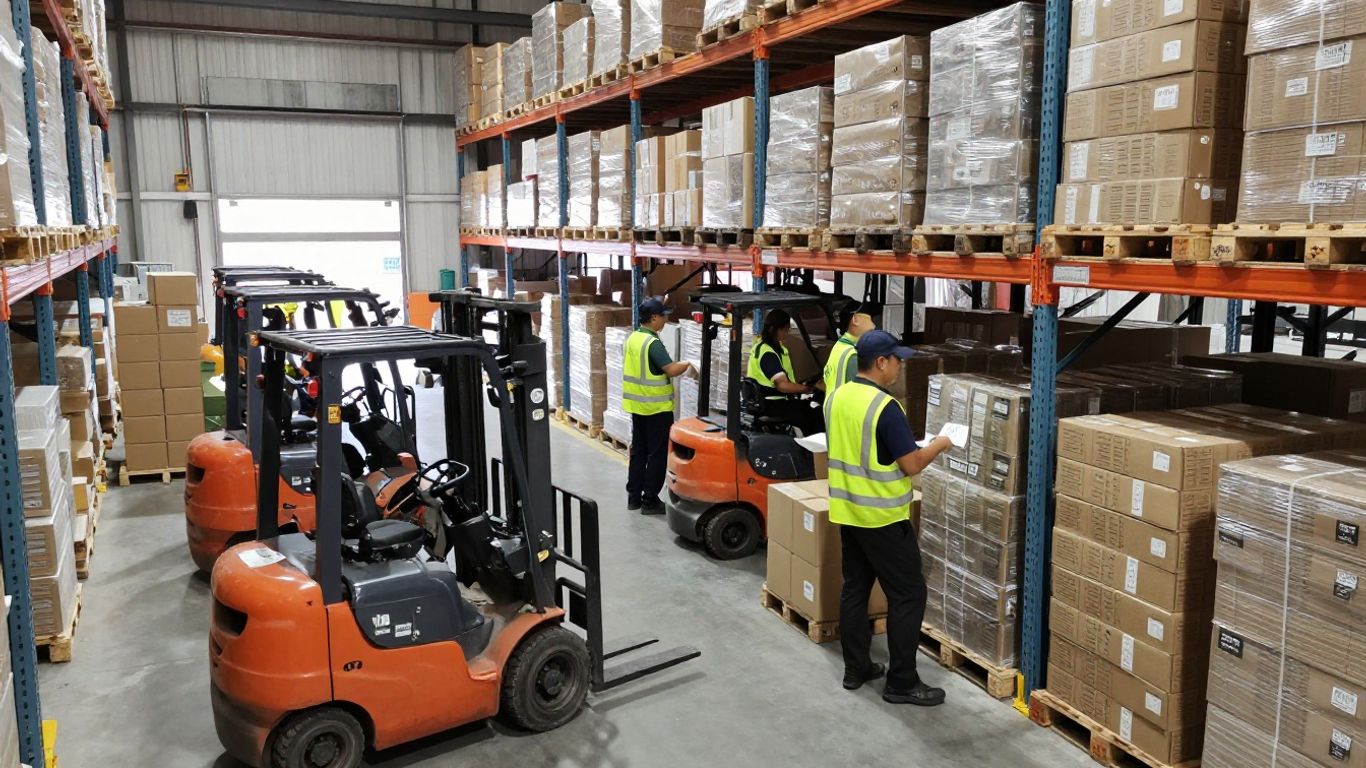
In 2026, the focus for supply chain management is shifting. We're moving away from just chasing the lowest cost and instead prioritizing resilience. Think about it – the last few years really showed us that being super efficient can fall apart when things get bumpy. Now, the goal is to build supply chains that can handle disruptions without completely breaking down.
AI is a big part of this. It's getting smarter at spotting potential problems before they become major issues. This means predicting risks with raw materials coming in, figuring out new ways to move goods if a route is blocked, and generally keeping things running smoothly even when the market is unpredictable. It's less about being lean and more about being smart and able to adapt.
Here’s a look at what that means in practice:
- Predictive Analytics: Using AI to forecast demand at a very specific level, like individual stores, so you know exactly what products are needed where.
- Dynamic Routing: Automatically adjusting delivery routes based on real-time traffic, weather, or other disruptions.
- Risk Sensing: Monitoring global events and supplier stability to flag potential shortages or delays early.
- Inventory Optimization: Balancing stock levels across different locations to minimize waste while still meeting demand.
Factories are also changing. They're becoming more like learning systems, not just automated machines. This involves using things like computer vision to catch tiny flaws or 3D printing to make parts on demand, cutting down on the need to store tons of spares. The idea is to use data to make these factories self-correct and improve over time, working alongside people rather than just replacing them.
The whole point is to create a supply chain that's not just fast, but also tough. It needs to be able to bend without breaking, keeping customers happy even when unexpected things happen. This adaptability is what will set businesses apart as they look to expand.
10. Revenue Forecasting Tools
In 2026, predicting future income isn't just a nice-to-have; it's becoming a core function for many teams, especially those focused on customer success. Gone are the days when forecasting was solely the finance department's job. Now, with smarter tools, everyone from customer success managers (CSMs) to sales leaders needs to get a handle on it. These tools are becoming essential for businesses looking to expand because they offer a clearer picture of what's coming next.
Think about it: if you're trying to grow, you need to know where your money is likely to come from. Revenue forecasting tools help with this by looking at past sales, current customer behavior, and market trends. They use data to make educated guesses about future revenue. This helps businesses make better decisions about where to invest, what products to push, and how many people they might need to hire.
Here's how these tools are changing the game:
- Sharper Renewal Predictions: Instead of just hoping customers renew, these tools analyze how much they're using your product, their overall satisfaction, and any signals that might indicate they're thinking of leaving. This means you can step in before a renewal date to address issues or highlight value.
- Identifying Expansion Opportunities: The tools can spot patterns that suggest a customer might be ready to buy more or upgrade. This isn't about a hard sell; it's about understanding their needs and offering solutions that genuinely help them.
- Better Budgeting and Resource Allocation: Knowing roughly how much revenue to expect allows companies to plan their spending more effectively. This means less guesswork and more strategic use of company funds.
- Aligning Teams: When sales, customer success, and finance are all looking at the same revenue forecasts, everyone is on the same page. This reduces confusion and makes it easier to work towards common goals.
The shift towards consumption-based pricing models means that revenue is often tied directly to how much a customer uses your service. This makes continuous forecasting and understanding usage patterns absolutely critical. It's less about a big renewal event and more about ongoing value delivery that naturally leads to continued spending.
For example, a company might use a forecasting tool that shows a particular customer segment is increasing their usage of a specific feature. The tool might flag this as a potential expansion opportunity. The customer success team can then proactively reach out, not to sell, but to offer training or support related to that feature, which in turn could lead to increased usage and revenue. It’s a more organic way to grow.
Figuring out future sales can be tricky, but there are tools to help. These tools can make smart guesses about how much money your business might make. Want to learn more about making good guesses for your business? Visit our website today!
Looking Ahead
So, as we wrap up our look at back office support in 2026, it's clear things are changing fast. AI isn't just a buzzword anymore; it's becoming a real part of how businesses operate, handling tasks from crunching numbers to talking with customers. This means the people working behind the scenes aren't just doing routine jobs. They're becoming strategic partners, helping guide the company's growth by making smart decisions and understanding what customers really need. It’s a big shift, but one that opens up a lot of opportunities for businesses ready to adapt and for the teams that power them.
Frequently Asked Questions
What is Agentic AI and how will it change back office jobs?
Agentic AI refers to smart computer programs that can do tasks on their own, like making decisions or taking actions. In 2026, these AI agents will start handling more complex jobs in the back office, not just simple ones. This means they'll connect with systems like ERP and CRM to manage things like supplier talks or customer interactions, making businesses run smoother.
How are Customer Success Managers (CSMs) roles changing?
CSMs are becoming less about just managing tasks and more about being strategic advisors. With AI handling routine work, CSMs will focus on helping customers make big decisions, understand the value they're getting, and achieve their business goals. It's a shift from coordinating to influencing and guiding strategy.
What is AI Ops and why is it important for businesses?
AI Ops, or AI Operations, is about using AI to manage and improve IT operations. In 2026, businesses will use AI Ops to make sure AI systems are running smoothly, securely, and efficiently. This helps ensure that AI is a reliable part of the business, not just an experiment.
How will Program Managers use AI in their work?
Program Managers will use AI to help design and manage the systems that support AI. This includes making sure data is handled correctly, AI models are secure, and that AI works well with other business tools. They'll focus on the bigger picture of how AI fits into the company.
What are Consumption Leads and how do they impact business growth?
Consumption Leads focus on how customers use a company's services, especially with new pricing models based on usage. They help customers get the most out of what they're paying for, which naturally leads to growth as customers use more. This makes expansion a continuous process, not just a yearly event.
Why are Forward-Deployed CSMs becoming more common?
Forward-Deployed CSMs work closely with specific customer groups, often high-value ones, to drive growth. They are deeply involved in helping these customers succeed and expand their use of services. This hands-on approach is key for businesses looking for targeted growth and better customer outcomes.


Comments
Post a Comment