The Evolving Role of AI in Back Office Processing: A 2026 Outlook

It feels like everywhere you look, there's talk about AI changing how businesses work. The back office, that engine room of operations, is no exception. As we head into 2026, AI isn't just a buzzword anymore; it's actively reshaping jobs, processes, and how companies measure success. This article looks at the real changes happening, focusing on the role of AI in back office processing in 2026 and what it means for everyone involved.
Key Takeaways
- By 2026, AI will be deeply integrated into back office tasks, moving beyond simple automation to handle complex operations and decision-making.
- The workforce is shifting, with new roles like AI Generalists and Agent Managers emerging, requiring a blend of technical understanding and broader business skills.
- Agentic AI, capable of autonomous action and problem-solving, will drive significant efficiency gains, but requires careful orchestration and oversight.
- Responsible AI practices are becoming essential, moving from theory to practical application to build trust and ensure ethical operations.
- Companies will increasingly focus on the business value and sustainability impact of AI, using it to improve efficiency while managing its environmental footprint.
The Evolving Role of AI in Back Office Processing in 2026
Back office operations are really changing, and AI is a big part of that. It’s not just about making things faster anymore; it’s about fundamentally rethinking how work gets done. By 2026, we're seeing AI move beyond simple task automation to become a more integrated partner in daily operations.
Defining the Scope of AI in Back Office Operations
When we talk about AI in the back office, we're not just talking about chatbots answering simple questions. The scope has broadened considerably. Think about tasks like invoice processing, data entry, and even initial stages of customer support. These are areas where AI agents can now handle a significant chunk of the workload, often with more accuracy and speed than humans.
- Automating repetitive tasks: AI excels at jobs that follow a clear set of rules.
- Data analysis and pattern recognition: Identifying trends or anomalies in large datasets.
- Workflow orchestration: Managing the flow of information and tasks between different systems and people.
The goal isn't just to replace human workers, but to free them up for more complex, strategic work that requires human judgment and creativity.
Key AI Technologies Transforming Back Offices
Several AI technologies are driving this transformation. Machine learning, for instance, allows systems to learn from data and improve over time without explicit programming. Natural Language Processing (NLP) helps AI understand and process human language, which is key for tasks involving text documents or customer interactions. Robotic Process Automation (RPA), often enhanced with AI, is used to automate rule-based digital tasks.
Here's a quick look at some of the tech making waves:
| Technology | Primary Back Office Application |
|---|---|
| Machine Learning (ML) | Predictive analytics, fraud detection, process optimization |
| Natural Language Processing (NLP) | Document analysis, sentiment analysis, automated reporting |
| Robotic Process Automation (RPA) | Automating data entry, form filling, system integration |
| Computer Vision | Document scanning, image analysis, quality control |
Measuring the Impact of AI on Back Office Efficiency
So, how do we know if AI is actually working? It's all about the metrics. We need to look beyond just cost savings. While reducing operational expenses is a clear benefit, we also need to consider improvements in accuracy, turnaround times, and employee satisfaction. For example, if an AI system can process invoices 50% faster with fewer errors, that's a measurable win. It also means the finance team can spend less time on tedious data entry and more time on financial planning or strategic analysis.
Key metrics to watch include:
- Processing Time Reduction: How much faster are tasks completed?
- Error Rate Decrease: How often are mistakes made compared to manual processes?
- Cost Per Transaction: What is the overall cost of completing a specific task?
- Employee Productivity Gains: Are employees able to handle more complex tasks or a higher volume of work?
Ultimately, the successful integration of AI in the back office by 2026 will be defined by its ability to create more agile, accurate, and strategically focused operations.
Emergence of New Workforce Dynamics with AI Integration
It's not just about machines taking over tasks anymore. The way we work is really changing because of AI, and by 2026, we're seeing some pretty big shifts in the back office. Think less about robots replacing people and more about how humans and AI will work together. This integration is creating entirely new job categories and demanding a different set of skills from everyone.
The Rise of the AI Generalist
Remember when jobs got super specialized? AI is starting to reverse that trend in many knowledge-based roles. AI agents can now handle many of those specific, repetitive tasks that used to fill up someone's day. This means we might need fewer people who are experts in just one narrow area. Instead, companies are looking for individuals who have a broader understanding of different tasks. These folks can then oversee and guide the AI agents, making sure their work lines up with what the business needs. It's like having a jack-of-all-trades, but for the digital world.
New Roles Created by AI Adoption
AI isn't just automating old jobs; it's actually creating new ones. These aren't just minor tweaks either; these are distinct roles with their own responsibilities. For example, we're seeing roles like an AI Forecast Coach, who keeps an eye on how predictive models are performing and makes adjustments. Then there's the Supply Chain Agent Manager, responsible for overseeing the AI agents that handle things like booking loads and talking to suppliers. These new positions require a mix of technical know-how and a good grasp of the business itself. It's a whole new landscape of job titles popping up.
Skills Needed for the AI-Augmented Workforce
So, what does this mean for us? We need to start thinking about what skills will be important. It's not just about being good at one thing anymore. Companies are looking for people who are adaptable and open to learning. Being AI-forward, meaning you're comfortable working with AI tools and understanding their capabilities, is becoming a big plus. We also need people who can think strategically and solve problems that AI can't handle on its own. It's about developing a blend of technical understanding and strong human judgment. The World Economic Forum's Future of Jobs Report 2025 even suggests that AI will create more jobs than it displaces, but we need to be ready for them.
The focus is shifting from performing individual tasks to orchestrating and managing AI systems. This requires a different mindset, one that values collaboration between humans and machines, continuous learning, and a strategic outlook on how technology can drive business outcomes.
Here's a quick look at how roles might change:
- Transactional Roles: Expect consolidation as AI handles routine tasks like invoice processing and basic communication. Professionals will focus more on complex exceptions and relationship management.
- Specialized Technical Roles: Some deep specialization might lessen as AI agents gain proficiency. Broader technical understanding and oversight skills will be more in demand.
- Customer Service Roles: AI will act as a co-pilot, handling routine queries and providing real-time information, allowing human agents to focus on more complex customer needs and building rapport. This means better, more personalized customer interactions customer care is enhanced by AI.
- Management and Strategy Roles: These roles are becoming even more critical. Leaders need to understand how to integrate AI, manage AI-augmented teams, and make strategic decisions based on AI-driven insights.
Agentic AI: Driving Automation and Orchestration
Agentic AI is really changing the game for back office work. Think of it as giving AI agents the ability to not just do a single task, but to manage and coordinate multiple tasks, almost like a human team member. This means we're moving beyond simple automation to something much more dynamic and intelligent. These agents can handle complex workflows, make decisions, and even learn from their actions, leading to significant boosts in productivity.
Understanding Agentic AI Capabilities
Agentic AI is all about giving AI systems more autonomy. Instead of just following a script, these agents can understand context, plan steps, and execute them. They can process information, interact with different systems, and adapt to changing situations. For example, an agent could be tasked with processing a customer order. It might first check inventory, then generate an invoice, schedule shipping, and even update customer records – all without constant human input. This autonomy is what sets agentic AI apart.
Orchestration Layer for AI Agent Management
With many AI agents working together, you need a way to manage them. That's where the orchestration layer comes in. It's like a central control panel for all your AI agents. This layer helps you:
- Deploy and manage agents: Easily set up new agents and assign them tasks.
- Monitor performance: Keep an eye on what agents are doing and how well they're performing.
- Connect agents: Link different agents together to work on more complex processes.
- Ensure alignment: Make sure the agents' work fits with the company's overall goals.
This orchestration is key to making sure all the AI agents work together smoothly and effectively, like a well-oiled machine.
Real-World Benchmarks for Agentic AI Success
It's not enough to just have agentic AI; you need to know if it's actually working. This means setting clear goals and measuring the results. We're seeing companies focus on benchmarks that show real business value. This could be:
- Financial Impact: How much money is the AI saving or making?
- Operational Speed: How much faster are processes running?
- Error Reduction: How many mistakes are being avoided?
- Customer Satisfaction: Are customers happier with the faster, more accurate service?
Setting up these benchmarks is important. It helps us see what's working, what's not, and where we can improve. Without clear measures, it's hard to know if the investment in agentic AI is paying off. We need to see proof that these systems are making a tangible difference.
By focusing on these practical measures, businesses can truly understand and maximize the benefits of agentic AI in their back office operations.
Responsible AI: From Principles to Practice

We've all heard the buzzwords about Responsible AI (RAI), but by 2026, it's moving beyond just talk. Many companies are realizing that just having principles isn't enough; they need to actually put them into action. It's about making sure the AI we use is fair, transparent, and doesn't cause unintended harm. This shift from theory to practice is becoming a big deal.
Operationalizing Responsible AI Frameworks
Getting RAI frameworks up and running can be tricky. It's not as simple as flipping a switch. It requires a coordinated effort across different departments, like IT, risk management, and the AI teams themselves. Clear roles and expectations need to be set early on. Think of it like building a house – you need a solid plan and skilled workers to make it happen.
Here's a look at how companies are trying to make RAI operational:
- Integration: Bringing IT, risk, and AI specialists together from the start. This helps align goals and responsibilities.
- Testing & Monitoring: Using new tech tools to continuously check AI systems. This means experimenting with these solutions now to be ready for wider adoption.
- Assurance: Getting independent reviews for high-risk AI systems. This adds an extra layer of confidence.
The real challenge isn't defining what Responsible AI looks like, but building the processes to make it a daily reality. This means embedding checks and balances into every stage of AI development and deployment.
Ensuring Transparency and Mitigating Bias
One of the biggest hurdles in AI is making sure it's transparent and free from bias. When AI makes decisions, we need to know why. This is especially important in areas like customer service, where understanding individual customer behavior is key to providing tailored experiences. If an AI system is biased, it can lead to unfair outcomes. Tools like automated red teaming and AI-enabled monitoring are becoming more common to help spot and fix these issues. It's about building trust by showing how the AI works and actively working to remove unfairness.
The Business Value of Responsible AI Implementation
So, why bother with all this? Because Responsible AI isn't just a nice-to-have; it's becoming a business imperative. Studies show that companies focusing on RAI see better ROI, improved efficiency, and even better customer experiences. When customers trust that AI is being used responsibly, they're more likely to engage. It's not just about avoiding problems; it's about creating a competitive advantage. By making AI fair and transparent, businesses can build stronger relationships and drive more sustainable growth. This focus on ethical AI can lead to improved customer satisfaction and a more positive brand image.
AI's Impact on Sustainability and Business Returns
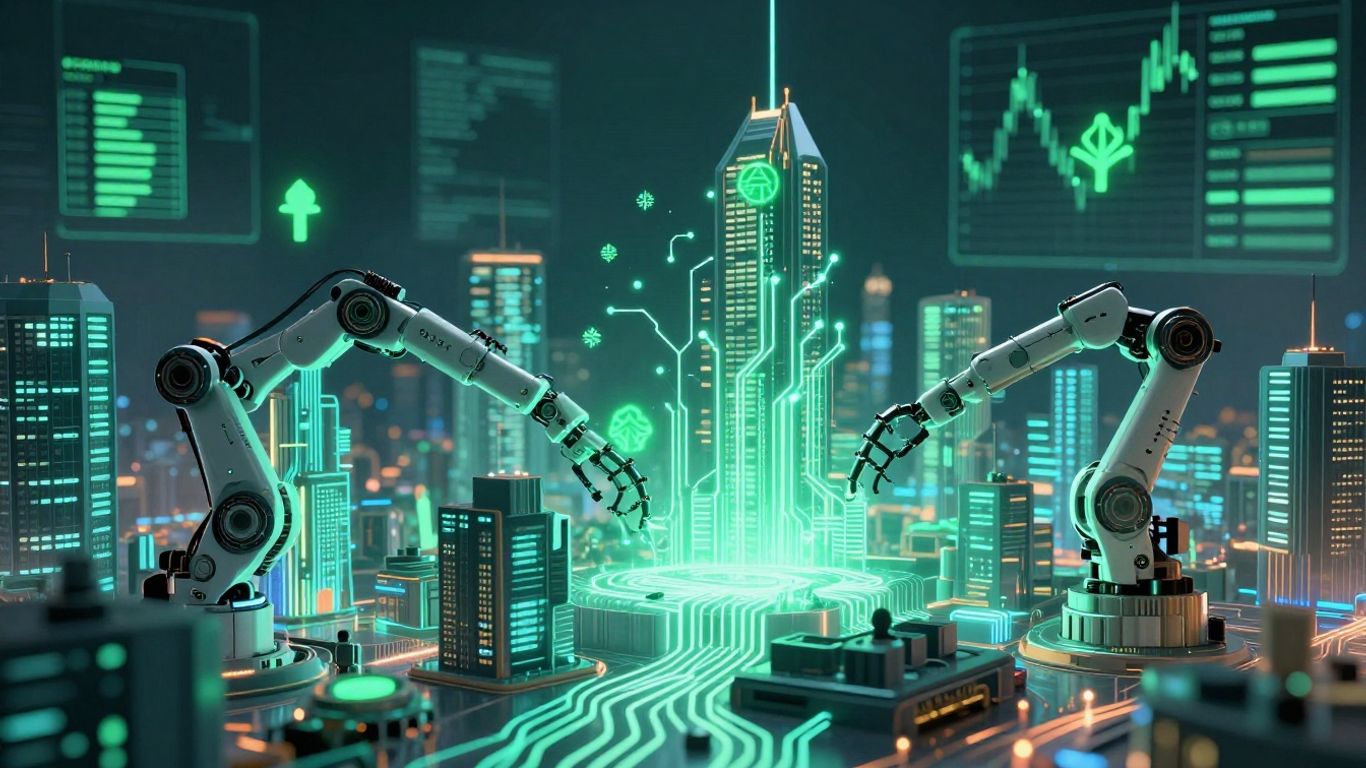
It's easy to think of AI in the back office purely in terms of cost savings and efficiency, but by 2026, its role in driving sustainability and, by extension, business returns is becoming much clearer. Companies are starting to see how AI can not only make operations greener but also create tangible financial benefits.
AI for Enhanced Operational Efficiency
AI's ability to process vast amounts of data quickly means it can spot inefficiencies that humans might miss. Think about optimizing energy usage in data centers or streamlining logistics to cut down on fuel consumption. These aren't just environmental wins; they directly translate to lower operating costs. For instance, AI can analyze supply chain data to identify the most efficient routes and modes of transport, reducing both carbon emissions and delivery times. This kind of optimization is becoming a standard part of how businesses operate.
Balancing AI's Environmental Footprint
We can't ignore that AI itself uses energy. As AI adoption grows, so does its energy demand. However, the technology is also getting more efficient. The trick is to use AI smartly. This means approving its use only when it genuinely adds value and considering things like 'carbon scheduling' – planning AI tasks for times when renewable energy is more readily available. It's about being deliberate with AI deployment to minimize its environmental impact while maximizing its benefits.
Driving Business Value Through Sustainable AI
This is where things get really interesting. AI can help businesses understand what their customers want regarding sustainability. By analyzing customer data, AI can identify preferences for eco-friendly products or services, allowing companies to tailor their offerings and marketing. This can lead to new market opportunities and stronger brand loyalty. Furthermore, AI can help track products across the entire value chain, reducing waste and the risk of costly recalls. Ultimately, integrating sustainability goals into AI strategies is no longer just a nice-to-have; it's becoming a driver of real business growth and competitive advantage.
Here's a look at how AI contributes:
- Resource Optimization: AI can predict demand more accurately, reducing waste in inventory and production.
- Energy Management: AI can optimize power consumption in facilities and data centers.
- Supply Chain Transparency: AI tools can trace materials and products, verifying sustainability claims and improving accountability.
- Customer Insights: AI can identify consumer interest in sustainable products, opening new revenue streams.
The push for business returns is increasingly intertwined with sustainability efforts. AI offers a way to achieve both, making operations leaner and more environmentally sound, which in turn appeals to a growing segment of conscious consumers and investors. It's a cycle where doing good for the planet also does good for the bottom line.
Strategic Shifts in Back Office Roles Due to AI
It's pretty clear by now that AI isn't just a fancy tool; it's actively reshaping what people do in back office jobs. Some tasks that used to take up a lot of someone's day are just… gone. Think about roles that were mostly about entering data or moving simple paperwork around. AI can do that stuff way faster and with fewer mistakes. This means fewer people are needed for those specific jobs.
Roles Facing Consolidation and Automation
Many jobs that involve repetitive, rule-based actions are seeing a big change. For instance, roles focused on routine documentation, like import/export coordinators, are being automated. AI can process customs declarations and do basic classification research much quicker than a person. Similarly, dispatchers who used to spend ages assigning loads and talking to carriers are now seeing AI handle most of that. The time it takes to assign a load has dropped from over 20 minutes to under a minute. This means the human role shifts from constant manual work to overseeing exceptions and handling the really tricky situations that AI can't figure out.
- Inventory Clerks and Data Entry: These roles are prime candidates for automation.
- Routine Expediting: Tasks that follow a strict set of rules are being taken over by AI.
- Basic Documentation Processing: AI handles tasks like customs declarations efficiently.
The core idea is that if a job can be broken down into a clear, step-by-step process, AI is likely to take it over. This isn't about eliminating jobs entirely, but about consolidating tasks that are predictable and don't require complex human judgment.
Roles Experiencing Growth and Evolution
But it's not all about jobs disappearing. AI is also creating new opportunities and changing existing roles. We're seeing a rise in demand for people who can manage, oversee, and work alongside AI systems. These aren't just technical roles; they require a blend of understanding the business and how AI works. For example, roles like an AI Forecast Coach, who tunes predictive models, or a Supply Chain Agent Manager, who sets the boundaries for AI agents, are becoming important. These jobs require a different kind of skill set, focusing on strategy, oversight, and problem-solving that goes beyond what AI can do. The focus shifts from doing the task to managing the system that does the task. This is why professionals who understand both their industry and AI are in high demand.
The Future of Human Oversight in AI Processes
So, what does this mean for the future? Human oversight is still incredibly important, but its nature is changing. Instead of directly performing tasks, humans will be responsible for setting the strategy, defining the parameters for AI, and handling the exceptions that fall outside AI's capabilities. Think of it as being the conductor of an orchestra rather than playing every instrument. This requires a new kind of workforce, one that is adaptable and can collaborate with intelligent systems. The goal is to create a synergy where AI handles the heavy lifting of routine tasks, freeing up humans to focus on higher-level thinking, innovation, and building relationships. This evolution is key to making sure AI integration truly benefits the business and its employees, moving beyond just cost savings to creating new value. For a look at how this is playing out in customer service, consider the 2026 call center model.
- Strategic Governance: Setting the rules and direction for AI systems.
- Exception Handling: Managing complex issues AI cannot resolve.
- AI System Auditing: Ensuring AI operates as intended and ethically.
- Cross-functional Alignment: Integrating AI outputs with broader business goals.
AI is changing how jobs in the back office work. Many tasks that used to be done by people are now being handled by smart computer programs. This means some jobs might change or disappear, but new ones will also be created. It's important for businesses and workers to understand these changes and get ready for them.
Want to learn more about how AI is reshaping businesses? Visit our website for insights and solutions.
Wrapping It Up
So, looking ahead to 2026, it's pretty clear that AI in the back office isn't just a futuristic idea anymore. It's here, and it's changing things fast. We're seeing AI move beyond just automating simple tasks to actually helping manage complex workflows and even creating new kinds of jobs. The key for businesses will be figuring out how to work alongside these AI tools, focusing on what humans do best – like strategy, complex problem-solving, and building relationships. It’s less about AI replacing people and more about how people and AI can team up to get better results. Getting this right means rethinking how we train people, redesign jobs, and measure success, making sure we're all ready for this next chapter.
Frequently Asked Questions
What exactly is AI in the back office?
Think of AI in the back office as smart computer programs that help with jobs that people used to do, like sorting mail, checking numbers, or answering simple questions. These programs can learn and get better over time, making work faster and easier for everyone.
Will AI take away all the jobs in the back office?
Not really. While AI will handle many repetitive tasks, it also creates new jobs. People will be needed to manage the AI, fix problems, and do the more creative and complex work that AI can't do. It's more about changing jobs than getting rid of them.
What is 'Agentic AI'?
Agentic AI refers to AI systems that can act on their own to solve problems and complete tasks. Imagine a smart assistant that not only tells you about a problem, like a delayed shipment, but also figures out a solution and fixes it automatically, without you needing to step in.
What does 'Responsible AI' mean?
Responsible AI means making sure AI is used in a fair, safe, and honest way. It's about preventing AI from making unfair decisions, being clear about how it works, and making sure it helps people without causing harm. It's like having rules to make sure AI is a good helper.
How can AI help a business make more money and be better for the planet?
AI can make businesses run smoother and faster, which saves money. By doing things more efficiently, it can also use less energy and resources, which is good for the environment. So, AI can help a company be both profitable and eco-friendly.
What new skills do people need for jobs with AI?
People will need to be good at working with AI, understanding how it works, and knowing how to guide it. Skills like problem-solving, creativity, and managing AI systems will become very important. It's about being a good partner to the AI.


Comments
Post a Comment